Server Hardware and Cisco UCS

sc1

sc2

replacing UCS B-series blade servers that are managed by UCSM requires their decommission and deletion from the inventory of UCSM first. The new blade servers must be commissioned with UCSM.

Note: CIMC vs UCSM and Intersight

  • When a UCS C-series rackmount server is managed by UCSM, it can no longer be managed by CIMC.
  • Only UCS C-series rackmount servers that are in standalone mode can be managed through CIMC.

Register a UCS C-series rackmount server in UCSM

A new UCS C-series rackmount server comes pre-configured to integrate with UCSM through the connection to the FIs. Once the UCS C-series server is cabled to the FIs, I wait for some minutes and I will see the server pop up in the UCSM page:

[Read]

Firewall Manual Stitching in ACI

aka Network Stitching. This is the manual method to insert L4-7 services; VLANs, EPGs and bridge domains are manually created, and EPGs are manually assigned to the L4-7 device interfaces, statically with Static Path Binding or dynamically with a VMM domain. If we have to insert more than one L4-7 device, repeat the above process as much as there are devices to integrate.

L4-7 device vs L4-7 Device

An L4-7 device in the manual stitching context is one firewall, one ADC, etc. A L4-7 Device in Service Graphs is the Logical Device, which might contain one or more Concrete Devices.

[Read]

How to Steer Traffic to a Firewall Using ACI L4-7 Service Insertion

If I configure the IP default gateways of the (Provider, Consumer) pair on ACI and attach an L4-7 Device to ACI, IP routing traffic involving the (Provider, Consumer) pair will bypass the Service Device due to routing in ACI itself. To circumvent that, there are three known methods to force traffic toward the L4-7 Device.

Method 1: NAT on the L4-7 Device

Method 2: SGR (no NAT on the L4-7 Device)

Method 3: VRF Sandwich and L3Outs

No NAT on the L4-7 Device.

[Read]

ACI L4-7 Logical Device

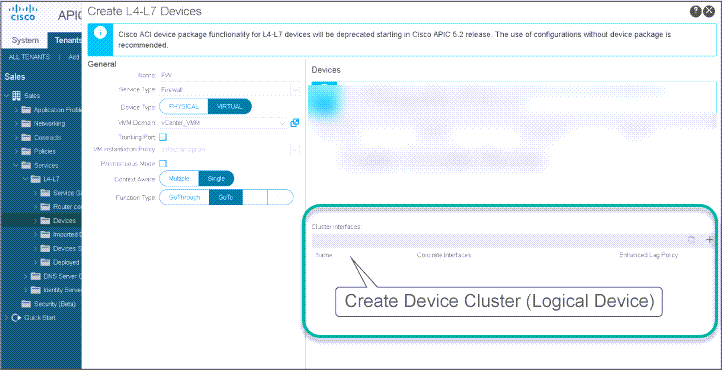
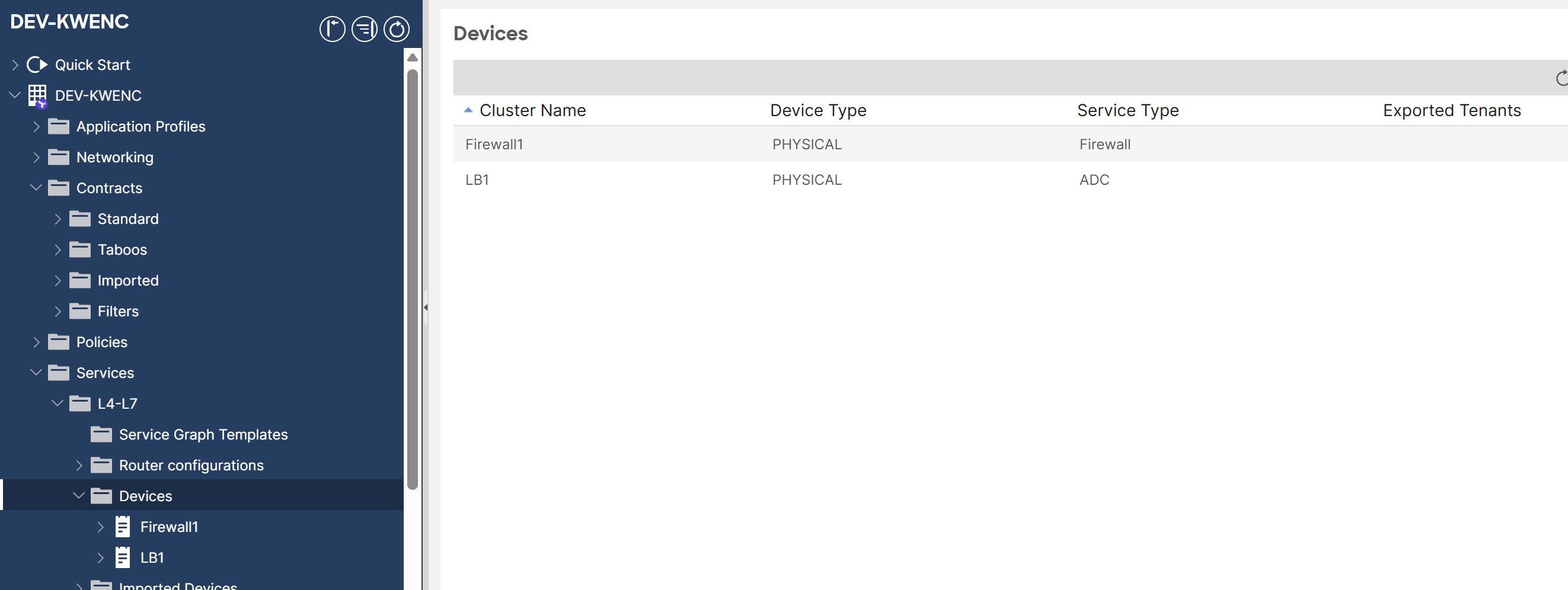
L4-7 Device == L4-7 Cluster Device == Logical Device. This is where we inform ACI about our firewall, ADC, etc. ACI considers service devices as part of application design. That is why we place their functions in EPG pairs or ESG pairs. sc1 The L4-7 Device == the Cluster Device == Logical Device: the ACI logical representation of one or more Concrete Devices that perform the same Service Type. Re-use of a L4-7 Device is possible, whether using its same Cluster interfaces or additional ones.

[Read]

ACI L4-7 Cluster Interfaces

is the logical interfaces of a L4-7 Device Cluster Device. We distinguish Provider Cluster Interfaces and Consumer Cluster Interfaces. The ACI administrator must define them under the Create L4-7 Device page. sc4

Consumer-Side Interface

The Cluster Interface that will attach directly (or indirectly, in case this is not the first L4-7 Device in the Service Graph Template) to the Consumer-side BD.

Provider-Side Interface

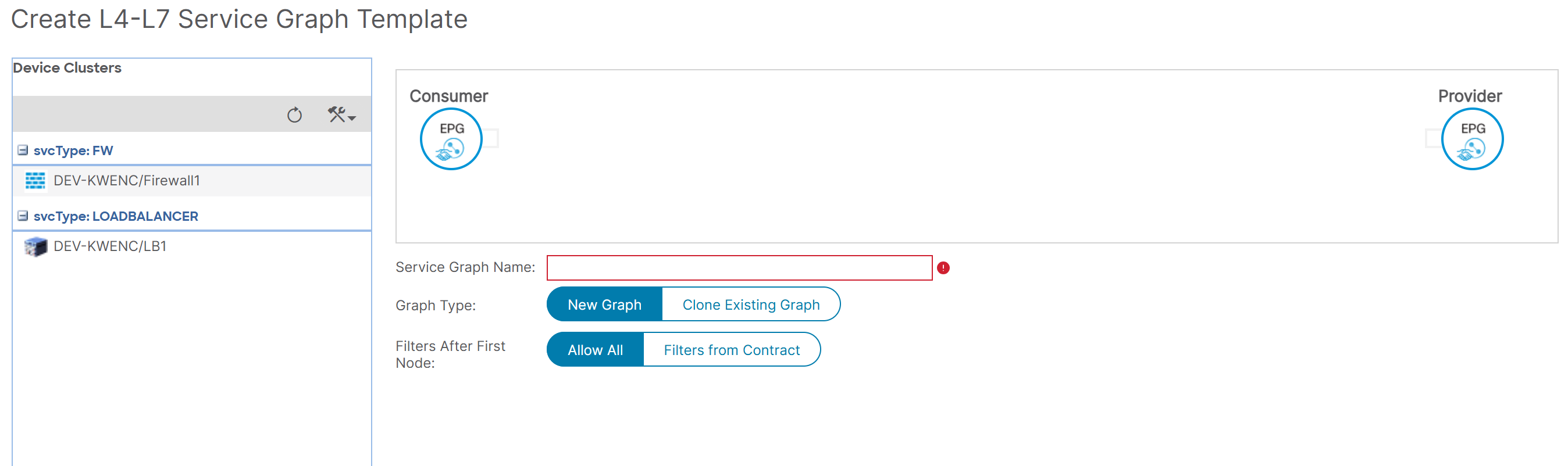
The Cluster Interface that will attach directly (or indirectly, in case this is not the first L4-7 Device in the Service Graph Template) to the Provider-side BD. Any Cluster Device will appear as a draggable element when creating a Service Graph Template. sc4 sc5 ❗ ACI does not detect duplicate IP addresses when two Cluster Devices have the same management IP address or VIP.

[Read]

eve-ng Notes

  • if a node does not boot up, wipe it first.
  • if no success: make sure the device configuration is set to “None” in the Edit menu.
  • if no success: create a new node and paste the configuration of the previous device on the new one.
  • export device configurations from the “Startup-configs” menu.
[Read]

Networking Concepts in RHEL

user01@rhel10-vm5:~$ cat /etc/protocols
# /etc/protocols:
# $Id: protocols,v 1.12 2016/07/08 12:27 ovasik Exp $
#
# Internet (IP) protocols
#
#   from: @(#)protocols 5.1 (Berkeley) 4/17/89
#
# Updated for NetBSD based on RFC 1340, Assigned Numbers (July 1992).
# Last IANA update included dated 2011-05-03
#
# See also http://www.iana.org/assignments/protocol-numbers

ip  0   IP      # internet protocol, pseudo protocol number
hopopt  0   HOPOPT      # hop-by-hop options for ipv6
icmp    1   ICMP        # internet control message protocol
igmp    2   IGMP        # internet group management protocol
ggp 3   GGP     # gateway-gateway protocol
ipv4    4   IPv4        # IPv4 encapsulation
st  5   ST      # ST datagram mode
tcp 6   TCP     # transmission control protocol
cbt 7   CBT     # CBT, Tony Ballardie <[email protected]>
egp 8   EGP     # exterior gateway protocol
igp 9   IGP     # any private interior gateway (Cisco: for IGRP)
bbn-rcc 10  BBN-RCC-MON     # BBN RCC Monitoring
nvp 11  NVP-II      # Network Voice Protocol
pup 12  PUP     # PARC universal packet protocol
argus   13  ARGUS       # ARGUS (deprecated)

<---- output omitted ---->
user01@rhel10-vm5:~$ ip add show 
1: lo: <LOOPBACK,UP,LOWER_UP> mtu 65536 qdisc noqueue state UNKNOWN group default qlen 1000
    link/loopback 00:00:00:00:00:00 brd 00:00:00:00:00:00
    inet 127.0.0.1/8 scope host lo
       valid_lft forever preferred_lft forever
    inet6 ::1/128 scope host noprefixroute 
       valid_lft forever preferred_lft forever
2: enp0s3: <BROADCAST,MULTICAST,UP,LOWER_UP> mtu 1500 qdisc fq_codel state UP group default qlen 1000
    link/ether 08:00:27:41:01:e5 brd ff:ff:ff:ff:ff:ff
    altname enx0800274101e5
    inet 192.168.56.103/24 brd 192.168.56.255 scope global dynamic noprefixroute enp0s3
       valid_lft 437sec preferred_lft 437sec
    inet6 fe80::a00:27ff:fe41:1e5/64 scope link noprefixroute 
       valid_lft forever preferred_lft forever
user01@rhel10-vm5:~$ 

NetworkManager.service is the Linux unit that runs the daemon responsible for networking on RHEL. One of the tools to interact with NetworkManager is nmcli.
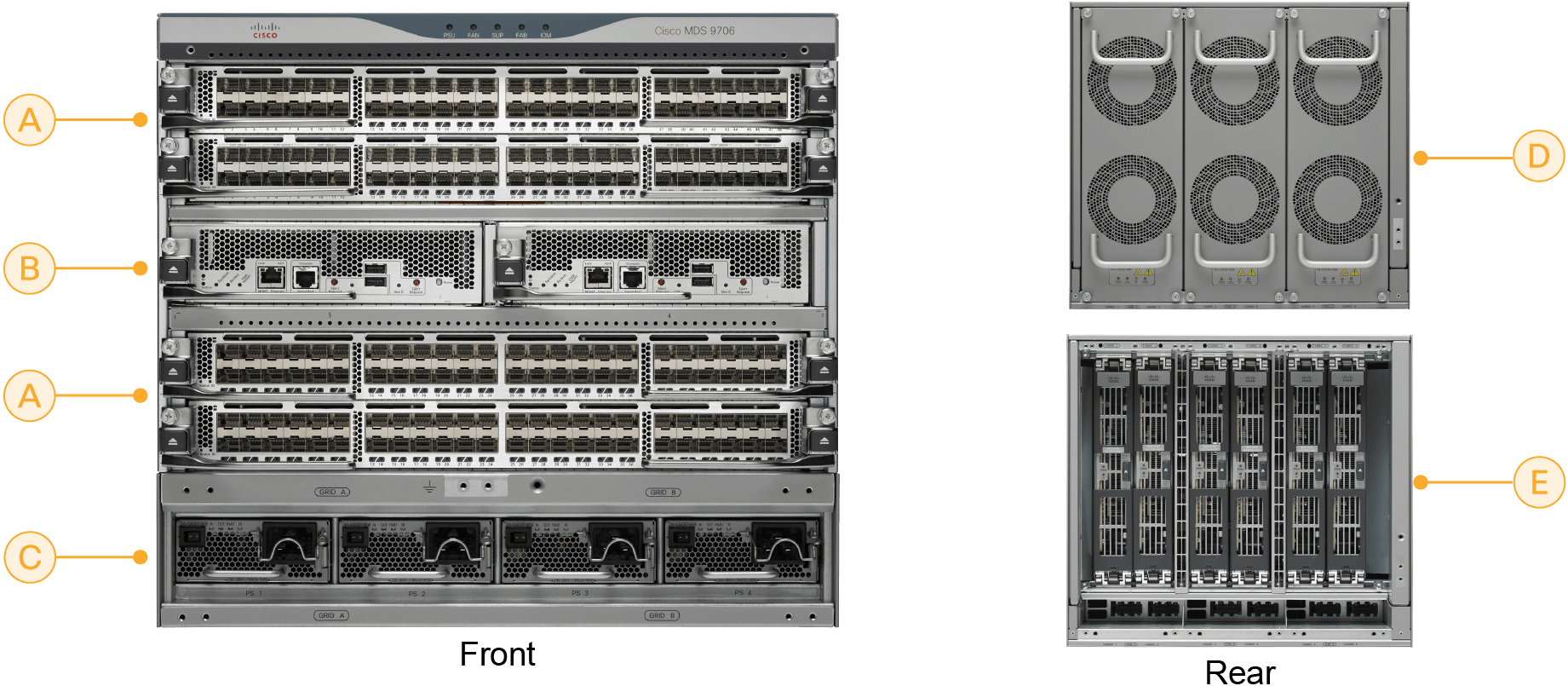
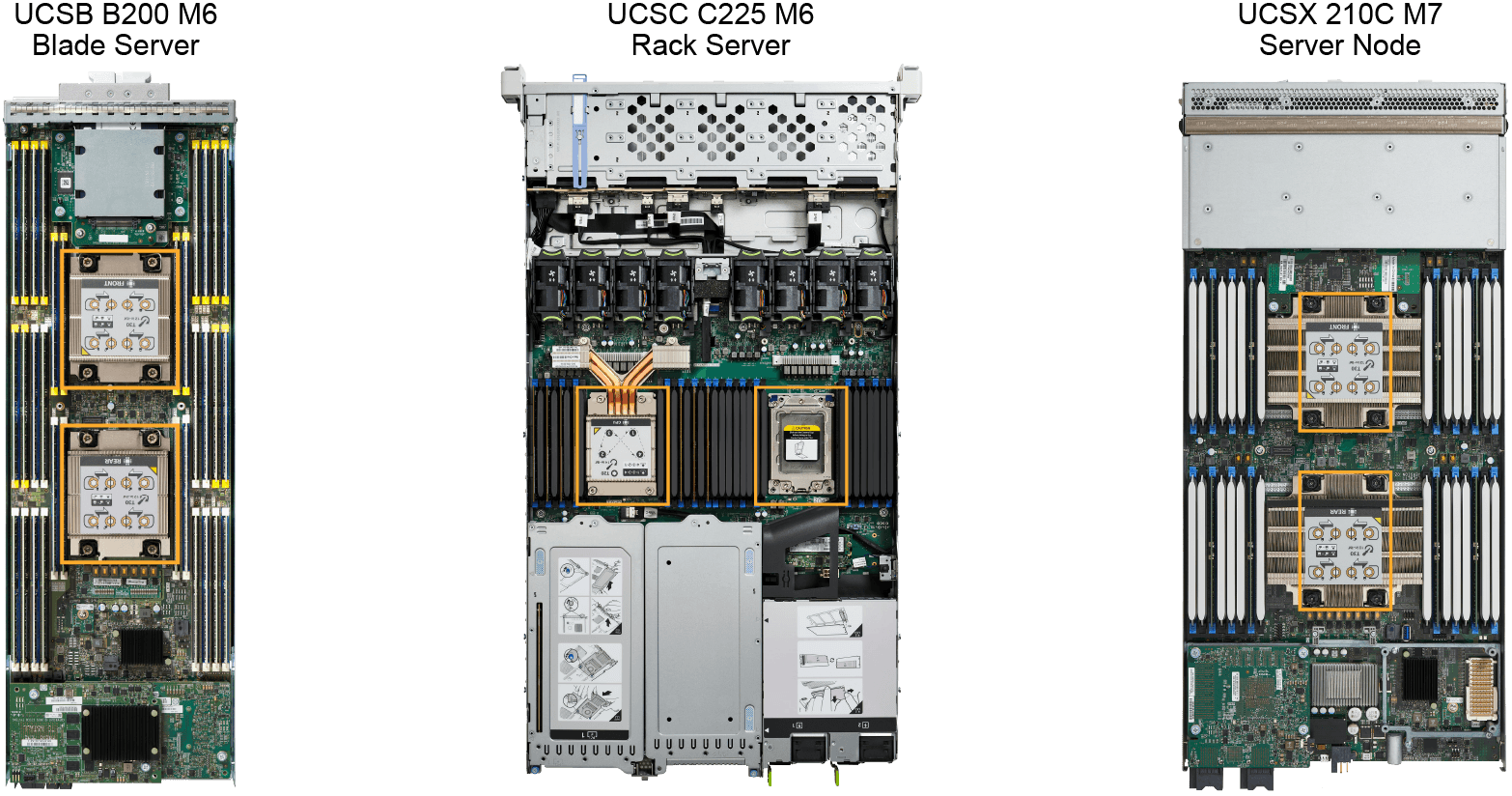
[Read]

Common Concepts For Cisco ACI Standard Service Graphs and Service Graph Redirects

These are common concepts for Standard Service Graphs and Service Graph Redirects. Service Graph with L4-7 Device in Go-To mode == L3 Service Graph. L4-7 Device in Go-To mode and the SGT has PBR enabled == L3 PBR Node.

Concepts

L4-7 Service Graph

A Service Graph requires the existence of one or more [[ACI Contracts|Contract]]s between a (Provider, Consumer) pair, whether they are EPGs or ESGs. Service Graphs are extensions of ACI Contracts; They leverage the concept of Provider EPG and Consumer EPG. Instead of manual stitching of L4-7 services, ACI can manage service devices just like it manages network policies, including automatic provisioning and removal of services when needed. Service Graph is a concept. requires the Service Graph Template

[Read]

Configuring PKI

Technology Definitions
CSR Certificate Signing Request

Certificates

Issuing a Digital Certificate

Certificate server, Certificate Authority. The entities that want the CA to issue a digital certificate for them must send their public key, their IP address and their FQDN to the CA. The CA replies with a digital certificate, aka identity certificate, aka public key certificate which means ‘I certify that the entity named in this certificate own the public key mentioned in this digital certificate.’ The digital certificate does not last forever; It has a validity period. The digital certificate is a file with the extension .cer.

[Read]

Operations with git

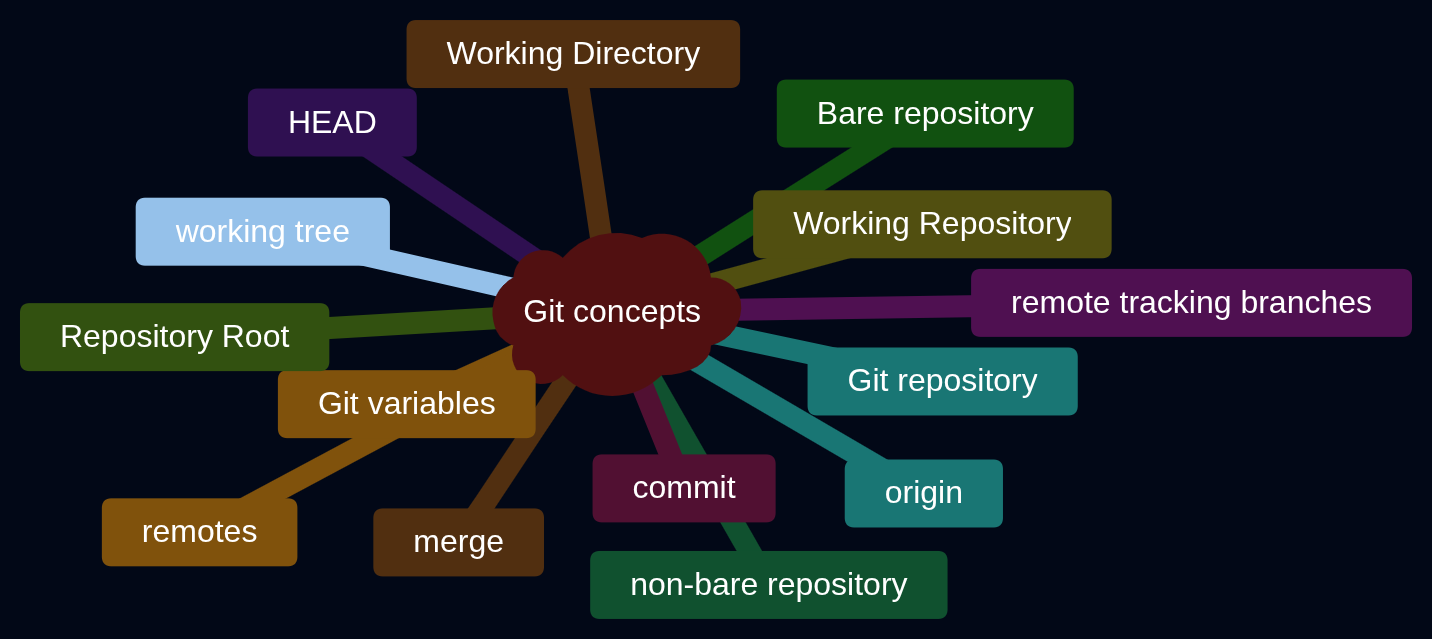
gitterminology.png

Git vs SVC

An SVC is a type of Software Configuration Management (SCM) git is the most popular distributed software version control (dsvc)

Git vs Github

Git is the DSVC (Distributed Software Version Control). Github is a cloud platform that uses Git as its core technology plus additional features like Discussions and Pull Requests.

Using Git

There are CLI tools like Git Desktop and GUI tools like Microsoft Visual Studio Code to use Git. GUI tools have their own limitations.

[Read]